|
|
Author Archive
Jacqui Colyer, the Florida Department of Children and Families’ Miami Director, is retiring from her post. Colyer had some two decades’ experience in social services. In an email to staff, DCF Secretary David Wilkins lauded for her “passion and commitment.” But it was the death of Nubia Barahona, and critical injuries to her brother, Victor — two adopted children under the oversight of Colyer’s office — that focused attention on the system. Three DCF workers were either fired or resigned. Colyer and four others were reprimanded for their handling of the Barahona case.
 Jacqui Colyer of Florida DCF Still, Colyer had some successes during her time at the top. “During her tenure, the number of children removed from their parents and placed in licensed foster care dropped by 35 percent. DCF also developed 400 community centers, such as medical clinics, where struggling families could apply for food stamps. The centers made it easier for the poor to seek help at locations close to home. Colyer said the agency worked with Miami’s early learning coalition to improve the quality of licensed child care centers and provide better staff training in detecting and preventing child abuse,” the Miami Herald wrote.
A long-time community advocate and once an adoptive parent of a troubled child, Colyer will stay on in a different role with the DCF, according to news reports. Read the entire story here.
The Department of Children and Families plan to privatize mental health services has been called by one judge a “rush to privatization…that will harm Broward’s mentally ill” and mental health patients, and one that’s “going to take a bad system and make it even worse” by Broward Public Defender Howard Finkelstein. Worse still, attorneys and advocates believe it could result in harm, injuries, even avoidable, wrongful death — and personal injury lawsuits and damage claims.
The Sun-Sentinel wrote, “The privatization wave that has swept over so much of state government was supposed to come to Broward’s mental health administration by 2013. But budget cuts to Florida’s Department of Children & Families have prompted a speedup, with DCF now trying to hand off oversight duties to a private Miami-Dade-based outfit by Oct. 1.”
Read the entire story here.
Florida Department of Children and Families Secretary David Wilkins plan to decrease visitation and quality assurance related to foster children in the agency’s care raises questions about lessons learned following the disappearance of Miami child Rilya Wilson. The result could be more lawsuits and damage claims lodged as vulnerable children in the system are lost or overlooked.
Visitation is a key component in the care of these children. Case workers develop the rapport of a therapeutic relationship with the children. It’s been shown that if something’s going wrong in the household, children are more likely to open up to an adult they trust. Relying on computerization and audits will not work. You cannot de-emphasize the child being visited; you cannot replace the value and impact of a quality visit – and the quality assurance that tracks visits. Otherwise, the system is operating in the dark.
Cuts have proven ominous. Earlier this year, Gov. Rick Scott ordered billions in state budget cuts, which resulted in the elimination of 500 of the DCF’s 13,000 positions.
“We made a lot of mistakes,” Wilkins told the Daytona Beach News-Journal this week. He was referring to the case of Nubia Barahona, whose adoptive parents have been charged in her death and her brother’s torture. “It heightened for me the importance of improved child safety.”
Wilkins said change is afoot. According to the paper, “He said he would take aim at practices that have been rendered unnecessary with new technologies. The requirement that DCF caseworkers visit children in their custody every 30 days — formulated in response to the disappearance of 5-year-old Rilya Wilson in 2000 — could be de-emphasized in favor of better electronic monitoring of school, medical and department records.” He added, “Don’t be afraid of change.”
Putting aside the complaints of child advocates, a legal aid attorney, parents and two of its own members, the Palm Beach County School Board last week voted 4-2 to continue the practice prone restraint — albeit as a last resort — when for subduing special-needs children, the Sun-Sentinel wrote.
The paper also reported that “federal studies have linked the use of prone restraint in other parts of the country to injuries and deaths. A Palm Beach Post series last year noted hundreds of incidents where the technique was used and the complaints of some parents who called for a ban on prone restraint.”
Some wanted the practice banned. Barbara Briggs, an attorney for the Legal Aid Society of Palm Beach County, cited the case of an autistic kindergarten student subdued using prone restraint 14 times last year, sometimes for as long as 30 to 35 minutes. Read the entire story here.
David Wilkins, secretary of the Florida Department of Children and Families, says the agency has made changes following the “horrific” child abuse case of Miami twins Victor and Nubia Barahona. Wilkins says the changes were created to help prevent abuse from occuring again.
Wilkins says DCF has put in place 19 short-term changes to improve the safety of children under its care. Changes include new procedures for hotline workers and working more closely on investigations with law enforcement. Florida children now are safer as a result of the changes, Wilkins says, according to First Coast News.
The changes follow the February discovery of Nubia Barahona, who was found dead in a garbage bag in her adoptive father, Jorge Barahona’s truck in Palm Beach County. Her twin brother, Victor, was found doused with toxic chemicals and left clinging to life. A report released from a Miami-Dade County grand jury that found DCF missed signs of abuse in the case, placed too much trust in the adoptive parents and failed to communicate effectively with child abuse investigators, according to First Coast News. Read the entire story here.
In yet another case that leaves children’s rights advocates wondering how systems and fail safes put in place to protect the vulnerable and avoid damages and personal injury and wrongful death claims get side-stepped, the Florida Department of Juvenile Justice is investigating the death of a teen in its care – and under the watch of at least one employee with questionable work records, according to news reports.
Laryell King, a guard at the Florida Department of Juvenile Justice West Palm Beach facility where an 18-year-old teen died, had been force to leave her last job. She even had a note in her file: “NO rehire in any position.” Another staffer, lockup superintendent Anthony C. Flowers, had his own “checkered work history,” notes The Miami Herald, after reviewing both staffers’ records. Yet, both were hired or promoted — and now are two of five staffers who were suspended after the death of Eric Perez, who died after a night of vomiting, complaining of headaches and possible hallucinations.
Child advocates and children’s rights attorneys are left to wonder why the two were rehired or promoted through the system. Read the entire Miami Herald story here.
In a case that Florida foster care and adoption advocates, attorneys and others have watched for months, a Miami-Dade grand jury delivered a scathing report related to Jorge and Carmen Barahona – the Miami couple accused of abusing and neglecting their adopted twin children. “Gripped by ‘a persistent, insidious bias of trust,’ (DCF) caseworkers and investigators gave Jorge and Carmen Barahona a pass every time concerns were raised that the couple was abusing and neglecting their adoptive children,” the grand jury said in its report, the Miami Herald wrote.
“So trusting was a state Department of Children & Families investigator that, on Feb. 10, when the agency received a report that adoptive twins Victor and Nubia Barahona were being tied up and locked in a bathtub, she left the Barahona home without ever seeing the children,” the Herald wrote of the report. ” She later wrote that the twins were at little risk of harm…’Were Nubia and Victor in the house tied up in that bathtub at that very moment?’ grand jurors asked in a strongly worded 25-page report. ‘We will never know.'”
Read the entire article here.
The South Florida dependency court hearings for Victor Barahona, the young boy allegedly abused by his adoptive parents, will be closed to the news media and public, Miami-Dade Circuit Judge Maria Sampedro-Iglesia ruled this week. Victor is one of three adopted children of Jorge and Carmen Barahona. The parents are accused of fatally abusing Nubia, Victor’s twin sister.
Judge Sampedro-Iglesia ruled that closing the hearings would be “in the best interest of the children.” The Guardian ad Litem program requested the hearings be closed. The news media, including the Miami Herald and local television station WPLG ABC10, had argued against closing the hearings, the Herald reported.
Read the entire story of Victor Barahona’s dependency hearing here.
When the federal government offered some $50 million in funds earmarked for child-abuse prevention, some would have jumped at the chance to use such money to help society’s most vulnerable: Abused and neglected children. Instead, Florida lawmakers rejected the grants, which were tied to the federal Affordable Health Care Act. The reason: Lawmakers don’t approve of the Obama administration’s health care reform package.
“This is just crazy,” Gwen Wurm, assistant professor of clinical pediatrics at the University of Miami, and a board member of the Our Kids foster care agency, told the Miami Herald. “This is the model for what you want in a prevention program. They have proven results.”
What’s more, the federal Race to the Top educational-reform effort is tied to Healthy Families’ child-abuse prevention program. This could result in the loss of a $100 million, four-year federal block grant. Read the entire story here.
Chalk one up for the good guys. Based on an alert by Howard M. Talenfeld, a Fort Lauderdale children’s rights attorney and foster child advocate, federal authorities were able to help former Florida foster child Markus Min Ho Kim recover $409,662 embezzled by his former foster parents.
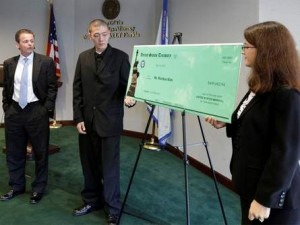 Recovery gives Markus Kim reason to smile Kim had contacted Talenfeld in 2008 about the theft. Talenfeld then alerted federal authorities to the embezzlement by his adoptive parents, Radhames and Asia Oropeza of Davenport, Florida. They had stolen life insurance money that came from Kim’s mother, who was slain in 2000 by his father, leaving Kim an orphan. Kim’s father currently is serving a life sentence in New York.
U.S. attorney for the Middle District of Florida, Robert E. O’Neill, said full recovery of a court-ordered victim restitution of such a large-scale fraud is rare, wrote the Ledger.
“The amount symbolized his slain mother’s hope for a better future and his adopted parents’ betrayal,” the paper wrote. Said Kim, now 25, “I don’t think I can put into words what it truly means to me.”
Read the entire story here.
Should dependency hearings related to the case of Victor Barahona be open or closed? That’s the question posed by advocates, guardians ad litem and media attorneys – and now facing a judge this week in Miami. Lawyers were arguing whether to close or keep open hearings regarding the boy, who at 10 was severely abused earlier this year, along his twin sister, Nubia. Nubia died from her injuries.
Jorge Barahona, their Miami, Florida, adoptive father, was found with Victor in critical condition and Nubia dead in Jorge’s pick-up truck. Both were victims of alleged abuse. An independent panel later found that Florida Department of Children and Families case workers’ efforts in the Barahona case were shoddy and was the result of “fatal ineptitude.”
According to the Miami Herald, “Lawyers for the Guardian Ad Litem program argued before Miami-Dade Circuit Judge Maria Sampedro-Iglesia that the hearings should be closed to protect Victor.” Read the entire story here.
In Florida and nationally, foster care was designed to provide a safe haven for society’s most vulnerable citizens – the abused, neglected and overlooked children. Yet, what happens when they “age out” — turning 18, independent and no longer wards of the state? As this article shows, in Washington state, as well as in Florida and nationwide, advocates, rights attorneys and guardians ad litem have worked tirelessly to help kids find independence once beyond the support of the foster care system.
In the article, “State’s foster care system discharges ill-equipped young adults; Despite program’s good intentions, teens are out on their own and unprepared,” The Spokane Review writes of a national issue: Kids who on their 18th birthday, some with behavioral health problems, are turned out of group or foster homes where they’d spent their lives in the state’s care. They are to start on their own — often unprepared.
“Recently cut off of the powerful psychotropic drugs that had been used to control his aggression, Tyler Dorsey ended up in the Spokane County Jail on a domestic violence charge six weeks after aging out of child welfare,” the publication wrote.
“A new state law might have protected Dorsey, who was turned away by numerous agencies because of his juvenile record of assault…[The law] entitles foster youth without a high school diploma or GED to remain in foster care until age 21 by opting into the federal Fostering Connections to Success and Increasing Adoptions Act.”
Read the entire story here.
|
-
Fruitland Park, FL – June 18, 2026 – Fox 35- Florida daycare found to have multiple child to personnel ratio, training, sanitary citations: DCF reports After a young child was seen running across U.S. 27 in Lake County before being returned to a nearby daycare, FOX 35 uncovered several citations from the Florida Department of Children and Families for this same daycare over the past three years.
West Palm Beach, FL – April 10, 2026 – WFLX Fox 29- Florida foster homes see dramatic 23% drop as advocates worry about future of at-risk youth According to a national foster care survey, the number of foster homes in Florida has taken a dramatic 23% drop in the last three years, and child advocates fear this trend could continue.
Tallahassee, FL – August 27, 2025 – WJHG News Channel 7- New law makes moving easier for Florida foster families Moving is stressful enough, but for foster families in Florida, it’s often meant starting from scratch.
Miami, FL – August 14, 2025 – NBC 6 South Florida- North Miami couple arrested after kids found ‘severely malnourished’: Police A North Miami couple was arrested for child neglect after authorities said their two young children were found “severely malnourished” and one had arm and leg fractures.
Yorkville, IL – August 12, 2025 – Fox 32- Illinois lawmaker, DCFS dispute legality of intern investigators in child abuse cases An Illinois lawmaker is accusing the Department of Children and Family Services (DCFS) of breaking state law by allowing uncertified interns to conduct child abuse and neglect investigations, while the agency says all investigators meet legal certification requirements.
Miami Gardens, FL – August 5, 2025 – CBS News- Miami Gardens mom faces neglect charges after nine children found living in “deplorable conditions,” police say A Miami Gardens mom is facing multiple counts of child neglect after police discovered nine children living in a home in “deplorable conditions,” according to Miami Gardens police.
Riviera Beach, FL – July 7, 2025 – CBS 12 News- DCF won’t comment after 7-year-old girl stomped to death; mom charged with murder It’s the agency with the most important mission in the state: keeping kids safe.
Tallahassee, FL – July 4, 2025 – WCJB- New Florida laws expand access to care for children with disabilities Children with disabilities across Florida will soon see more support, thanks to two new state laws aimed at improving access to care.
Clewiston, FL – May 27, 2025 – Fox 4- Clewiston city director arrested, accused of sending explicit texts to child A City of Clewiston operations director is facing serious charges – accused of sending sexually explicit texts to a 12-year-old girl.
Miami, FL – April 30, 2025 – NBC Miami- ‘Wish you well in hell’: Survivor quotes Cardi B as nurse gets life in adoptive daughter’s murder A Miami-Dade nurse convicted in the 2018 death of her 7-year-old adoptive daughter and the abuse of her other two adopted children was sentenced to life in prison on Wednesday.
Orlando, FL – April 29, 2025 – WFTV 9- Records show Florida knew about defects in application portal for DCF benefits For more than a year, Florida’s Department of Children and Families has been telling 9 Investigates there are no problems with the state’s website for SNAP and Medicaid benefits.
Springfield, IL – April 25, 2025 – Capitol News Illinois- Illinois community-based foster homes face insurance ‘crisis’ Insurance companies are reducing the scope of coverage for some community foster agencies in Illinois, leading to higher costs, diminished coverage and fewer options for agencies who say a continuance of the trend could lead to closures.
Miami, FL – April 1, 2025 – WPLG Local 10- Disgraced ex-NYC councilman caught with child sex abuse videos at Miami airport, feds say A former member of the New York City Council — who left office in disgrace leading up to a federal bribery conviction — is now in the feds’ crosshairs again: this time in South Florida.
Cook County, IL – March 24, 2025 – WCBU- Illinois’ child welfare agency failed to produce critical reports after child deaths The state agency responsible for keeping Illinois’ most vulnerable children safe has failed to produce legally required public reports after examining what went wrong in hundreds of cases of child deaths and thousands of serious injuries, the Illinois Answers Project reports.
Chicago, IL – March 22, 2025 – ABC 7 Chicago- Illinois child welfare agency’s reporting on abuse and deaths scrutinized The Illinois Department of Children and Family Services is now under scrutiny for its lack of proper reporting on child abuse and neglect cases, according to a report from the Illinois Answers Project.
Tallahassee, FL – March 9, 2025 – WFSU- Two Florida state agencies announce new tools for combating human trafficking Two state agencies are working to identify kids vulnerable to sex trafficking before they’re victimized. The Florida Department of Children and Families and the Florida Department of Law Enforcement have announced an enhanced screening tool and new grant funding for law enforcement.
Chicago, IL – January 31, 2025 – NPR Illinois- DCFS launches new app for caseworkers and families The state of Illinois is rolling out a new app to help parents of abused and neglected children better communicate with their Department of Children and Family Services [DCFS] caseworkers and with other service providers.
Broward County, FL – January 30, 2025 – The Sun-Sentinel- Broward Sheriff’s Office will stop staffing juvenile detention center in May Blaming staff shortages and an unsafe building to work in, the Broward Sheriff’s Office will no longer send deputies to work at the state’s Department of Justice’s Juvenile Assessment Center.
Vernon, CT – November 19, 2024 – WLBT- Woman left 4 kids home alone in ‘filth’ for days while she took a trip to New York, police say A woman in Connecticut is accused of leaving her four kids alone for days while she took a trip to New York, according to authorities.
Flagler County, FL – November 10, 2024 – CBS 12- Flagler County middle school employee accused of attacking disabled student An employee at Indian Trails Middle School has been accused of child abuse after she was caught on camera striking a disabled student in an unprovoked attack.
Chicago, Il – November 8, 2024 – CBS News Chicago- Troubled teen who escaped DCFS caseworkers was not placed into secure facility after being found A 17-year-old with a violent history escaped from his caseworkers in Chicago last month, and it turns out the foster child in the care of the Illinois Department of Children and Family Services was not placed in a secure facility recommended to the state after being brought back into custody.
Jacksonville, FL – September 20, 2024 – Action News Jax- Duval County teacher under investigation after 8-year-old is injured A Beauclerc Elementary School teacher is being investigated by Duval County Public Schools after a physical incident with an 8-year-old student.
Miami, FL – September 3, 2024 – Miami Herald- Rising costs of care could strain funding for Florida program for brain-damaged kids Facing withering criticism from parents, advocates, lawmakers and insurance regulators, Florida’s compensation program for children born with catastrophic brain injuries opened its bank account three years ago and improved the lives of some of the state’s most disabled children.
Orlando, FL – September 2, 2024 – Orlando Sentinel- Autism drowning deaths prompt push for children’s specialized swim lessons Drowning is the number one cause of death for kids with autism and Florida leads the nation in fatalies.
Aventura, FL – August 5, 2024 – WSVN News 7- Parents arrested after leaving toddler in hot car while they shopped at Target in Aventura, police say A man and woman were arrested on child abuse charges after allegedly leaving their 2-year-old child in a hot car while they shopped at Target in Aventura.
Austin, TX – July 18, 2024 – WPLG Local 10- Largest housing provider for migrant children engaged in pervasive sexual abuse, US says Employees of the largest housing provider for unaccompanied migrant children in the U.S. repeatedly sexually abused and harassed children in their care for at least eight years, the Justice Department said Thursday, alleging a shocking litany of offenses that took place as the company amassed billions of dollars in government contracts.
Daytona Beach, FL – July 9, 2024 – WESH 2- Police: Man arrested in Daytona Beach after dangling, dropping child off second-floor resort balcony A 31-year-old man was arrested on Saturday after allegedly dropping a 4-year-old off the second floor of a Daytona Beach resort, according to an affidavit from the police department.
Palm Coast, FL – July 7, 2024 – WSVN 7- Florida woman charged with child neglect after good Samaritan finds 2-year-old son wandering near busy road alone A good Samaritan found a 2-year-old boy wandering in a Florida neighborhood all alone, and now the child’s mother is facing charges after she was found fast asleep inside their home.
Homestead, FL – May 16, 2024 – WPLG Local 10- Homestead couple accused of murdering their 6-month-old baby girl Two 24-year-old parents brought their 6-month-old to Homestead Hospital in cardiac arrest Sunday afternoon; doctors found that the baby had no pulse and signs of severe child abuse, according to police.
Brevard County, FL – May 16, 2024 – WESH 2 Orlando- Family sues Brevard County day care for alleged child abuse and negligence An incident at a Brevard County day care involving a child and teacher has led to more allegations of child abuse and negligence after the Department of Children and Families studied surveillance video.
Chicago, IL – May 7, 2024 – WSIL – TV- Lawsuit alleges pervasive child sexual abuse at Illinois juvenile detention centers for decades A group of 95 people filed a lawsuit in Illinois on Monday alleging they were sexually abused as children in juvenile detention centers across the state for over two decades.
Wildwood, FL – May 4, 2024 – Fox 35 Orlando- Florida DCF worker accused of abusing 11-year-old foster child A Kids Central employee was arrested after he aggressively threw an 11-year-old foster child onto a couch and hurt her, according to an arrest affidavit from the Wildwood Police Department.
Tallahassee, FL – May 3, 2024 – The Tampa Bay Times – Nearly 600,000 Florida kids shed from government health care, study says Nearly 600,000 Florida children lost their government-provided health insurance last year after the federal government ended the national COVID-related health emergency, more than any other state except Texas, according to a newly released report by the Georgetown Center for Children and Families.
|