Florida Child Advocate.com -- The Florida Foster Care Survival Guide -- is the one-stop resource for protecting the rights of children under the state’s care. We created this site for children, the families who love them, the caregivers who serve them, guardians who advocate for them, and the attorneys who counsel them in how to access resources and agencies, understand their rights, and address dependency, damages or disability claims.
Florida attorneys associated with Florida Child Advocate represent current foster children, former foster children and the physically disabled and developmentally disabled in negligence, abuse, physical abuse and sexual abuse, civil rights and damages claims against the Florida Department of Children and Families, its lead agencies and community based care providers, and other child welfare providers. These attorneys have helped recover hundreds of millions of dollars in damage claims in one of the largest and most successful Foster Care and Disabled Persons practice areas in the county.
This site is sponsored by the law firm Justice for Kids. Attorneys involved with this site include Howard Talenfeld, Stacie J. Schmerling, Justin Grosz, Nicole R. Coniglio, Lisa M. Hoffman, Lelia Schleier, Jillian E. Tate and Julianna B. Walo.
Every foster child needs attention. Let Florida Child Advocate.com be your legal resource.
Thank you for visiting. If you have any questions at all, or if you'd like to submit a Guest Column with helpful news or information for child advocates, please contact us directly.
Tracey K. McPharlin, a partner in Fort Lauderdale law firm Colodny, Fass, Talenfeld, Karlinsky & Abate P.A., and specialist in foster children, foster care abuse, and damage claims, was elected 2009-2010 Chair of the Florida Bar Public Interest Law Section (“PILS”) on June 26 at the Florida Bar’s 2009 Annual Meeting.
McPharlin had served a statewide capacity as PILS Chair-Elect for the past year, during which she worked closely with outgoing Chair Maria Elena Abate, also a partner at Colodny, Fass, Talenfeld, Karlinsky & Abate. Together, the two worked to build the PILS membership base through added CLE programming and awareness efforts.
Both Abate and McPharlin, who works extensively on the firm’s cases involving foster children, foster care abuse, and damage claims, chaired the PILS Legal Needs of Children Committee in successive terms. Read the rest of this entry »
Florida Today writes about the Florida Department of Children and Families study of compliance by physicians and case workers with regard to legal rules related to prescribing mental health drugs to foster care kids. The publication commented that they report was “disturbing and demands action.”
The conclusions — of both the study and Florida Today’s editors — are correct: The practice is too widespread, with too little oversight.
Yet this should be just a starting point. If it were to conduct a similar study, I believe the Florida Agency for Persons with Disabilities ( APD ) would arrive at similar conclusions, namely that group home operators often are administering these medications without the proper power of consent from families or guardians, and physicians aren’t obtaining appropriate histories and conducting appropriate physical or behavioral examinations.
The improper use of psychotropic medications has hit near epidemic proportions in the Florida foster care and group home setting. The public first realized this with the April suicide of Gabriel Myers, 7, and weeks later, with a wrongful death lawsuit filed following the overdose of Denis Martez, 12.
Florida Today’s editorial helps raise public awareness of this important issue. We all should keep awareness high so we can remedy this serious situation. Read the full editorial here.
By Jennifer Anchors, Executive Director of Children’s Home Society of Florida, Mid-Florida Division.
Happy Birthday, America. This week, we gather to celebrate the independence of our country and the freedoms we enjoy.
Independence is a recurring theme throughout our lives, beginning with our very first steps. We celebrate our 18th birthdays amidst plans for high school graduation, college enrollment, military enlistment or employment. These and other important life choices are made with the support and guidance of loving families.
Not so for Suzi. At 18, she was escorted to the door of a foster care facility, suddenly homeless. Sadly, Suzi had “aged out” of the foster care system, a harsh reality facing foster youth who are not adopted before their 18th birthdays. The traumatized teens, victims of abuse, neglect or abandonment, are handed notebooks containing their important personal papers and sent into the world ill-equipped, frightened and vulnerable. Carli, also among about 800 youth who age out of Florida’s foster care system each year, says “It’s like becoming an instant adult – I felt so alone.” Read the rest of this entry »
With eight of her nine children, Peggy Bach holds her newest child, Israel Bach,1 week old. Others are from the baby, clockwise, Andrew Bach, Grace Fisher, Arik Bach, Amber Hurley, Faith Fisher, Jake Bach and Bruce Bach. DON BURK/The Times-Union
For those looking for solutions to issues surrounding Florida foster children and families, look no further than to some of the innovative programs being implemented around the state.
By keeping vulnerable families together and providing financial and emotional support where possible, state agencies, their contracted providers and other child advocates are able to reduce or eliminate legal issues, damages, damage claims, lawsuits and other problems that can arise.
The more important result is a happier, more stable family. Below is the story from the Jacksonville Times-Union of how one family benefited from the redesign of the DCF model…
When Peggy Bach and her eight children were asked to leave her boyfriend’s house in December, she wasn’t quite sure what to do.
The 37-year-old Jacksonville woman was on maternity leave, pregnant with her ninth child. She had no money and no place to go. Bach was afraid to ask for help in fear she would lose custody of her kids. But by March, she had no other choice. Because of a redesign of the state Department of Children and Families, Bach retained custody of her children. She also got $1,200 to move into a new house, food stamps, mentoring for her children and even gave her multiple Wal-Mart gift cards until food stamps were approved.
That wouldn’t have always been the case. In the past, Bach’s kids would have been added to the 1,012 Duval County children living in foster or relative care. But as part of the redesign, DCF is spending more time working with parents and placing fewer children in the foster care system.
The private nonprofit agency running Broward County’s child welfare system seemed on the verge of chaos — FBI agents raided its main office, the state threatened to pull funding and the group’s board fired the chief executive officer. All of those woes engulfed ChildNet within a matter of hours April 13, 2007 — a day dubbed “Black Friday” by some local child welfare advocates.
On Thursday, the same Fort Lauderdale building where FBI agents once draped crime scene tape was the scene of another significant day in ChildNet’s history, this time a happy one. The group’s president signed a $333 million contract with the state Department of Children & Families to continue managing Broward foster care for the next five years.
Howard Talenfeld, president of the advocacy group Florida’s Children First, commended current ChildNet President and CEO Emilio Benitez’s efforts in improving child welfare services, but said he’s still seeing a disturbing trend of children who after entering the ChildNet system are placed in situations where they are abused again.
In addition, it would have been unusual for another company to be chosen to take over ChildNet’s contract, Talenfeld said.
“The nature of the system is structured in such a way that it’s virtually impossible for a new agency to come in and compete with the holder of an existing contract,” he said.
For far too long, Florida foster children haved needed their own voice and legal counsel in their own dependency case and now before other state and local agencies that make critical decisions that critically affect their lives.
Representation should be of primary concern. Currently, only 60-80% of children in the dependency system are represented by the GAL program – and very few by attorneys. Quality representation of each child in foster care, before School Boards, Agency for Persons with Disabilities, and the Agency for Healthcare Administration, to name a few agencies, may be the single most important step we can take to positively impact the lives of foster children.
This year, Jesse Diner, President-Elect of the Florida Bar, has placed among his highest priorities taking the recommendations of the 2002 Commission on the Legal Needs of Children and introducing legislation to create a Statewide Office of the Children’s Advocate.
My appointment this May to chair the Florida Bar Association’s Legal Needs of Children Committee is part of that goal. Our committee will help write legislative language and seek passage of laws and regulations critical to fulfilling the state’s mandate to serve the best interests of the children in its care. Read the rest of this entry »
It wasn’t that long ago when the Florida Department of Children & Families was seen as a hapless bureaucracy. Whether it was their seeking to incarcerate an 8-year-old to ensure he received proper care, or simply losing youngsters supposedly under its care, it didn’t take much for DCF to make a mockery of its role in child welfare.
The good news is that DCF is no longer that troubled agency. Unfortunately, many of those problems that once bedeviled DCF now belong to those local nonprofits and government agencies that are under contract with the state to provide foster care and other child protective services. Thank community-based care for that. Read the rest of this entry »
The April 16 suicide death of 7-year-old Gabriel Myers, a foster child in the custody and care of the Florida Department of Children and Families, shocks the conscience. Gabriel apparently hung himself with the shower hose in the bathroom of his foster home in Margate.
The victim of sexual abuse, as well as other abuse and neglect that resulted in him being removed from his family and placed in foster care, Gabriel had been prescribed a variety of mind-altering psychotropic medications while in foster care to deal with the myriad behavioral problems he was experiencing, no doubt largely the result of the abuse he had suffered. Reports are that he was on three or four different drugs, or combinations thereof, at the time of his death.
What is almost as shocking to the conscience as a 7-year-old wanting to, knowing how to and actually committing suicide, is that a 7-year-old would be on not just one, but multiple psychotropic medications. Most such drugs have never been tested for pediatric use, and have not been FDA-approved for such use. Their prescription and use with kids is generally “off label,” meaning there are no approved instructions or guidelines for such use. Read the rest of this entry »
George H. Sheldon is Secretary of the Florida Department of Children and Families. This column originally appeared in the South Florida Sun-Sentinel.
It is time to recognize the thousands of Florida foster parents who open their hearts and their homes to children in need of a safe, loving and nurturing environment, and who — when the time is right — can let them go again.
Foster parents have the ability to love a child as their own, regardless of whether the child lives with them for a month or a year. They have the challenging task of providing an environment that helps a child heal and prepare to go back home, if possible, or to a new permanent home. Foster parents are a vital resource for these children as they wait between a painful past and an uncertain future. Read the rest of this entry »
Waiting for a permanent home for weeks or months may feel like an eternity to a Florida child in foster care.
It is especially frustrating when a grandmother, aunt or other relative living out of state is ready and willing to provide a home for a boy or girl removed from a family because of abuse or neglect.
The Florida Department of Children and Families’ (DCF) response has been to implement a fully electronic database to facilitate the transfer of dependent children outside of Florida.
Once the Department committed itself last year to speeding up out-of-state transfer of a child by using electronic records, DCF has significantly reduced the time it takes to exchange required information about the child with the appropriate state. Florida is the leader among the states in its use of electronic records for what is known as the Interstate Compact on the Placement of Children (ICPC).
The price-tag on converting to electronic records was $3,000, and about $100,000 a year is being saved on postage. Read the rest of this entry »
Psychotropic medications used without appropriate consent of parents and guardians has hit near epidemic proportions in the Florida foster care and group home setting. The public first realized this with the suicide of Gabriel Myers, 7, and weeks later, with a wrongful death lawsuit filed following the overdose of Denis Martez, 12.
The situation needs improved oversight — and the practice must stop.
In the following letter to Jim DeBeaugrine, Director of the Florida Agency for Persons with Disabilities, attorneys Howard Talenfeld and Maria Elena Abate, partners with the Fort Lauderdale law firm Colodny, Fass, Talenfeld, Karlinsky & Abate, P.A., call for Mr. DeBeaugrine to survey all licensed group homes working with his Agency as a first step in curtailing such use.
June 4, 2009
Jim DeBeaugrine, Director
Florida Agency for Persons with Disabilities
Tallahassee, FL 32399
Re: Death of Dennis Maltez–Investigation of Psychotropic Drug Use in Group Homes
Dear Director DeBeaugrine,
As attorneys for the estate of Denis Maltez, and long-time advocates for the rights of society’s most vulnerable citizens, we are very concerned about the role psychotropic drugs played in his death from serotonin syndrome. I know that you are quite familiar with this case as your agency took emergency action and suspended the license of Rainbow Ranches, in part because of the inappropriate use of such drugs. Read the rest of this entry »
Child advocate attorney Howard Talenfeld greets Florida Gov. Charlie Crist at the historic signing ceremony.
Florida’s foster children have a friend in Governor Charlie Crist.
With child advocate lawyers and other activists looking on, the governor in May signed legislation designed to help foster children statewide.
At a signing ceremony at the Children’s Services Council in Fort Lauderdale, Crist signed into law bills to help grant foster kids access to records for medical and educational needs.
The legislation benefits children in foster care as well as young people leaving foster care. The move “provides children in foster care better access to their own personal records often needed for medical and educational purposes. Senate Bill 1128 ensures that disabled homeless children and children in foster care receive appropriate educational services,” wrote Foster News Folly.
The bills can be credited, in part, to members of Florida Youth Shine, a statewide advocacy group that specializes in foster care and child welfare issues. “You’re great advocates, you truly are,” Crist said.
Yorkville, IL – August 12, 2025 – Fox 32- Illinois lawmaker, DCFS dispute legality of intern investigators in child abuse cases An Illinois lawmaker is accusing the Department of Children and Family Services (DCFS) of breaking state law by allowing uncertified interns to conduct child abuse and neglect investigations, while the agency says all investigators meet legal certification requirements.
Springfield, IL – April 25, 2025 – Capitol News Illinois- Illinois community-based foster homes face insurance ‘crisis’ Insurance companies are reducing the scope of coverage for some community foster agencies in Illinois, leading to higher costs, diminished coverage and fewer options for agencies who say a continuance of the trend could lead to closures.
Cook County, IL – March 24, 2025 – WCBU- Illinois’ child welfare agency failed to produce critical reports after child deaths The state agency responsible for keeping Illinois’ most vulnerable children safe has failed to produce legally required public reports after examining what went wrong in hundreds of cases of child deaths and thousands of serious injuries, the Illinois Answers Project reports.
Chicago, IL – March 22, 2025 – ABC 7 Chicago- Illinois child welfare agency’s reporting on abuse and deaths scrutinized The Illinois Department of Children and Family Services is now under scrutiny for its lack of proper reporting on child abuse and neglect cases, according to a report from the Illinois Answers Project.
Tallahassee, FL – March 9, 2025 – WFSU- Two Florida state agencies announce new tools for combating human trafficking Two state agencies are working to identify kids vulnerable to sex trafficking before they’re victimized. The Florida Department of Children and Families and the Florida Department of Law Enforcement have announced an enhanced screening tool and new grant funding for law enforcement.
Chicago, IL – January 31, 2025 – NPR Illinois- DCFS launches new app for caseworkers and families The state of Illinois is rolling out a new app to help parents of abused and neglected children better communicate with their Department of Children and Family Services [DCFS] caseworkers and with other service providers.
Broward County, FL – January 30, 2025 – The Sun-Sentinel- Broward Sheriff’s Office will stop staffing juvenile detention center in May Blaming staff shortages and an unsafe building to work in, the Broward Sheriff’s Office will no longer send deputies to work at the state’s Department of Justice’s Juvenile Assessment Center.
Chicago, Il – November 8, 2024 – CBS News Chicago- Troubled teen who escaped DCFS caseworkers was not placed into secure facility after being found A 17-year-old with a violent history escaped from his caseworkers in Chicago last month, and it turns out the foster child in the care of the Illinois Department of Children and Family Services was not placed in a secure facility recommended to the state after being brought back into custody.
Miami, FL – September 3, 2024 – Miami Herald- Rising costs of care could strain funding for Florida program for brain-damaged kids Facing withering criticism from parents, advocates, lawmakers and insurance regulators, Florida’s compensation program for children born with catastrophic brain injuries opened its bank account three years ago and improved the lives of some of the state’s most disabled children.
Austin, TX – July 18, 2024 – WPLG Local 10- Largest housing provider for migrant children engaged in pervasive sexual abuse, US says Employees of the largest housing provider for unaccompanied migrant children in the U.S. repeatedly sexually abused and harassed children in their care for at least eight years, the Justice Department said Thursday, alleging a shocking litany of offenses that took place as the company amassed billions of dollars in government contracts.
Homestead, FL – May 16, 2024 – WPLG Local 10- Homestead couple accused of murdering their 6-month-old baby girl Two 24-year-old parents brought their 6-month-old to Homestead Hospital in cardiac arrest Sunday afternoon; doctors found that the baby had no pulse and signs of severe child abuse, according to police.
Brevard County, FL – May 16, 2024 – WESH 2 Orlando- Family sues Brevard County day care for alleged child abuse and negligence An incident at a Brevard County day care involving a child and teacher has led to more allegations of child abuse and negligence after the Department of Children and Families studied surveillance video.
Wildwood, FL – May 4, 2024 – Fox 35 Orlando- Florida DCF worker accused of abusing 11-year-old foster child A Kids Central employee was arrested after he aggressively threw an 11-year-old foster child onto a couch and hurt her, according to an arrest affidavit from the Wildwood Police Department.
Tallahassee, FL – May 3, 2024 – The Tampa Bay Times – Nearly 600,000 Florida kids shed from government health care, study says Nearly 600,000 Florida children lost their government-provided health insurance last year after the federal government ended the national COVID-related health emergency, more than any other state except Texas, according to a newly released report by the Georgetown Center for Children and Families.





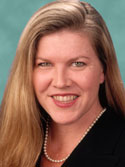 Tracey K. McPharlin, a partner in Fort Lauderdale law firm Colodny, Fass, Talenfeld, Karlinsky & Abate P.A., and specialist in foster children, foster care abuse, and damage claims, was elected 2009-2010 Chair of the Florida Bar Public Interest Law Section (“PILS”) on June 26 at the Florida Bar’s 2009 Annual Meeting.

